
Over the years, we have been led to believe that the sun is our enemy because “the sun causes skin cancer.” And since the sun causes skin cancer, we should stay out of the sun or wear sunscreen to block the harmful UV rays that cause it. But according to the latest research, the sun may not be the real problem.
Before I get to that, here are some facts about skin cancer you should know…
More than 2 million Americans develop skin cancer each year
Most cases involve one of two rarely fatal forms of skin cancer: basal cell and squamous cell carcinoma. According to the EPA, 40-50% of Americans who live to age 65 will be diagnosed with one of these at least once during their life. Studies suggest that basal and squamous cell cancers are strongly associated with cumulative UV exposure over many years of life. But “strongly associated” is not necessarily indicative of causation.
Dark-skinned people have the lowest risk of skin cancer, and fair-skinned people living close to the equator have the highest skin cancer risk, which seems to explain why Australia has the highest skin cancer rates in the world.
Melanoma is the one skin cancer that can be deadly
According to the National Cancer Institute, the rate of new melanoma cases among American adults has tripled since the 1970s, from about 8 per 100k people in 1975 to about 24 per 100k in 2010.
Also alarming, the melanoma death rate for white American men is up about 64% from 2.64 deaths per 100k in 1975 to 4.10 per 100k in 2010.
According to the CDC, since the year 2000, the rates of new melanoma cases among both men and women have been climbing by 1.9% per year. Even teenagers experienced a 2% per year increase between 1973 and 2009 (Wong 2013).
The official risk factors for melanoma are: family history, indoor tanning, fair skin, freckles, the number of moles on your skin, and exposure to ultraviolet radiation and severe sunburns.
Many experts suggest you reduce these risk factors by stopping indoor tanning, limiting UV exposure, and avoiding severe sunburns. I’m going to add one more suggestion. Eat plenty of colorful fruits and vegetables rich in protective antioxidants and phytonutrients every day.
A 2019 study found that people whose diets included high levels of vitamin A from fruits and vegetables had a 17 percent reduction in the risk of developing the second-most-common type of skin cancer (squamous cell carcinoma), compared with those who ate modest amounts of vitamin A-containing foods and supplements.
Sweet potatoes, carrots, leafy greens, apricots, and cantaloupe are all great sources of vitamin A.
Before we get too deep into this article, I want to make sure you know about Curaderm, a natural, non-toxic treatment for skin cancer derived from eggplant. I’ve used it successfully on several suspicious spots. It is especially effective on basal and squamous cell carcinomas and can also be used on melanomas that have not spread. To learn more about Curaderm, bookmark and watch my interview with the man who discovered and developed it, Dr. Bill Cham.
I’ve interviewed several people who have healed melanoma holistically against the odds. Watch my Melanoma survivor interviews here.
“Sunscreens alone do not reduce the rate of skin cancer.”
Multiple public health authorities– the FDA, the National Cancer Institute, and the International Agency for Research on Cancer – have all come to this same conclusion.
One reason sunscreens cannot guarantee protection from skin cancer appears to be that sunscreen users differ in important ways from sun avoiders. Sunscreen users spend more time in the sun, assuming sunscreen protects them, but many receive only partial protection.
Many sunscreens sold in the U.S. are effective at blocking UVB rays to prevent sunburn but provide less protection against UVA rays.
UVA rays penetrate the skin more deeply and damage DNA without blistering. UVA is also the primary form of radiation used in indoor tanning. Hours in the sun blocking UVB but not UVA may cause the same damage as hours in a tanning bed.
Several studies have reported that regular sunscreen use is associated with a lower risk of squamous cell carcinoma (Gordon 2009, van der Pols 2006) and a lower incidence of actinic keratosis – sun-induced skin changes that may progress to squamous cell carcinoma (Naylor 1995, Thompson 1993). But researchers have not found strong evidence that sunscreen use prevents basal cell carcinoma (Green 1999, Pandeya 2005, van der Pols 2006, Hunter 1990, Rosenstein 1999, Rubin 2005).
Both UVA and UVB rays are associated with causing melanoma, and there is a strong correlation between melanoma risk and the number of sunburns someone has had, particularly in childhood (Dennis 2010).
Here’s a puzzler: Melanomas often appear on parts of the body that don’t get the most sun exposure. The most common sites for men are the chest and back. For women, it’s the legs. For people of color, it’s the palms of hands, soles of feet, and under the nails. If sun exposure causes melanoma, why are African Americans getting it on the bottoms of their feet?
Sunscreen and melanoma studies
Some studies suggest that sunscreens protect against melanoma, such as a 2011 study showing that sun-savvy Australians reduced their risk of melanoma with daily use of SPF 15 sunscreen, wearing hats, and avoiding the sun in other ways (Green 2011), but there’s no way to tell which prevention habit helped the most… Maybe it was just the hats?
On the flip side, other studies suggest that sunscreen users have an increased risk of melanoma (Gorham 2007). A number of studies conducted in the 1990’s reported a higher incidence of melanoma among frequent sunscreen users (Autier 1998, Beitner 1990, Westerdahl 2000, Wolf 1998).
The biggest and most concerning sunscreen-and-cancer study to date…
A 2024 study of over 470,000 people in the UK found that frequent sunscreen users had a 292% higher risk of melanoma, a 140% higher risk of basal cell carcinoma, and a 126% higher risk of squamous cell carcinoma. This begs the question: do “frequent sunscreen users” have higher rates of skin cancer because they spend more time in the sun? It’s plausible that if they spend more time in the sun, they may have more cumulative UV-related skin damage even with sunscreen use. Or maybe it’s the sunscreen itself…
Risky sunscreen ingredients
In a study of 24 adults, researchers at the FDA found that four common sunscreen ingredients — oxybenzone, avobenzone, ecamsule, and octocrylene — were absorbed into the bloodstream at levels high enough to warrant additional safety studies.
Another concern is the widespread use of retinyl palmitate in sunscreen. This form of vitamin A has actually been linked to skin cancer in FDA-sponsored laboratory studies.
Benzophenone-3 (BP-3), another common ingredient in sunscreen, is an endocrine-disrupting chemical that has been proven to cause mammary gland tumors in mice.
Many sunscreens also contain aluminum, which could significantly increase the risk of oxidative damage to the skin. Applying aluminum-containing sunscreens multiple times in one day can give you a dose as large as one gram of aluminum.
Some sunscreens have also been found to be contaminated with known cancer-causer benzene, triggering recalls and lawsuits.
Perhaps baking chemical sunscreens containing multiple toxic pro-oxidants and potential cancer-causers into your skin isn’t such a good idea?
Sunscreens may be causing skin cancer more than the sun itself. This is why it’s important to use non-toxic mineral sunscreens. I keep an updated list of verified non-toxic sunscreens in Fullscript.
Tanning beds cause cancer
In 2009, the World Health Organization classified tanning beds as carcinogenic, and the International Agency for Research on Cancer calculates that if you start using tanning beds before age 30, your risk of developing melanoma jumps by 75 percent. In 2013, FDA commissioner Margaret A. Hamburg proposed banning tanning beds for anyone under 18 and requiring new warnings on tanning beds stating that they “can damage your skin and increase your risk of developing skin cancer.” A 2012 CDC report found that 1/3 of young white women ages 18-25 used a tanning bed an average of 20 times in the previous year.
In the last 35 years, tanning bed use has exploded, and melanoma rates have tripled.
My advice: Never use tanning beds. Spray tanning is toxic, too; don’t do that either.
The sun is the source of all life on Earth. It’s not something to be afraid of. But it can still burn you or blind you.
There are several factors suggesting that regular sun exposure is not as harmful as intermittent high-intensity sunlight (e.g., beach frying 1-2 times a year). As with many things, the dose determines the poison.
Outdoor workers report lower rates of melanoma than indoor workers (Radespiel-Troger 2009).
Melanoma rates are higher among people living in northern American cities with lower year-round UV intensity than among residents of sunnier cities (Planta 2011).
People with regular sun exposure have higher vitamin D levels, which may in turn reduce melanoma risk (Godar 2011, Newton-Bishop 2011, Field 2011).
The consensus among skin cancer researchers is that the most important step people can take to reduce their melanoma risk is to avoid sunburn, but not all sun exposure (Planta 2011).
Regular sun exposure is essential because it triggers a cascade of health-promoting benefits, including vitamin D synthesis.
How sunlight makes vitamin D in your body
UV-B rays from the sun convert a form of cholesterol in your skin into a precursor for vitamin D. That precursor is processed by your liver and kidneys into the vitamin D that your body can use.
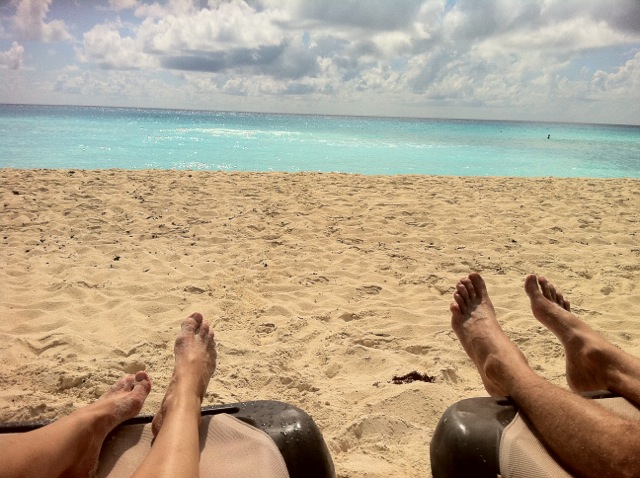
Just 10 minutes of midday summer sun while wearing a tank top and shorts can produce up to 10,000 IU of vitamin D. Vitamin D is one of the most powerful, health-promoting, anti-cancer vitamins known. That’s why getting daily sunshine is so vital to health. When at the beach, I make it a point to get 10-20 minutes of sun exposure before applying sunscreen.
It is nearly impossible to get vitamin D from the sun during the winter months, which may be one reason why so many people get sick in the winter. I make it a point to supplement vitamin D3 in the winter months.
Read my article on vitamin D here
Too much sun exposure accelerates aging
I have an olive complexion. My skin tans easily, and hey, I like to be tan. But unfortunately, the downside of tanning is premature skin aging. I know several women (you do too) who stayed tan year-round in high school and college. They looked pretty good then, but once they hit their late twenties and early thirties, they looked much older than their actual age with leathery, wrinkled, splotchy skin, like the Marlboro Man. So as much as I like to be tan, I would rather be a little pale and youthful than tan and prematurely aged. I also do not enjoy being sunburned. So I take extra precautions to avoid that.
Don’t depend on sunscreen to protect you
People who rely on sunscreens tend to burn, and sunburns are linked to cancer. Stanford University dermatologists, reviewing CDC data, concluded that people who relied solely on sunscreens for sun protection had more sunburns than those who reported infrequent sunscreen use but wore hats and clothing to shield themselves from the sun (Linos 2011).
In Sweden, increased use of sunscreen was associated with more sunburns among children (Rodvall 2010). Several other studies of real-world sunscreen use find that people who use sunscreen for skin protection during periods of intense UV-exposure still end up with more sunburns (Koster 2010, Autier 2007).
Basically, we put too much faith in sunscreen, and it’s not as good as everyone thinks. Sunscreens were invented to prevent sunburn, and they are commonly rated by their SPF, which indicates the product’s ability to prevent burning. High-energy UVB rays burn skin and directly damage skin DNA, but UVB rays only make up 3-5 percent of the UV radiation striking Earth’s surface.
More numerous UVA rays, by contrast, can be equally damaging without leaving the painful reminder of blistered skin. Because UVA radiation penetrates deeper into the body than UVB radiation, it can cause a different type of DNA damage (Cadet 2009).
For decades, sunscreen manufacturers and sunscreen users assumed that preventing or delaying sunburn would also prevent skin cancer. But many sunscreens only blocked UVB rays. Now it is generally accepted among researchers that both UVA and UVB exposure may contribute to melanoma risk (Donawho 1996, Garland 2003, Godar 2009, Setlow 1993).
When people use sunscreen to prevent sunburn, it can give them a false sense of security, leading them to spend more time in the sun, resulting in greater cumulative exposure to UVA rays, which can cause more subtle and serious damage (Autier 2009, Lautenschlager 2007). Good sunscreens provide similar levels of UVB and UVA protection.

What about sunglasses?
Sunglasses are a fun fashion accessory. I’ll admit, I love to wear them. Having said that, I am aware of claims by some folks in the health and wellness space that you should never wear sunglasses because, as the explanation goes, “Your eyes sense the sun’s brightness and send signals to your brain, triggering your body to excrete melanin that protect your skin from the sun, but sunglasses trick your brain into thinking it’s not as bright outside which blocks or delays that process, leaving you more susceptible to sunburn.” That makes sense, and it may be true to some extent, but I have yet to find a study that proves that wearing sunglasses delays melanin production or causes worse sunburns.
I’ve even seen some clips online from people claiming that, “If you never wear sunglasses, you will never get sunburned.” That is definitely false. I’ve spent many occasions in the sun without a pair of sunglasses and gotten a sunburn. I assume you have too.
UV400-rated sunglasses block 99% of all harmful ultraviolet light rays up to 400 nanometers and protect your eyes from UV damage and cataracts. Most sunglasses are UV400-rated, but some aren’t. Dark lenses that are not UV400-rated cause your pupils to dilate, letting in more light and more harmful UV rays. Look for a UV400 sticker or label on the packaging.
Here’s my summer strategy. In the morning and late afternoon, if it’s sunny, I may wear a hat but no sunglasses. If I first go outside at midday, when the UV is high, I wait 10 minutes or so before putting on sunglasses to send those “bright sun” protection signals to my body.
Here’s how to reduce your risk of sun damage at the beach:
-Don’t assume sunscreen is protecting you.
-Cover up! Hats, protective clothing, and use a beach tent or an umbrella.
-Wear UV400-rated sunglasses to protect your eyes from UV damage and cataracts.
-Don’t get burnt!
-Do not use a tanning bed or let yourself fry in the sun.
-Protect kids! Early-life sunburns are worse, so keep little ones out of the midday summer sun.
-Pick a non-toxic mineral sunscreen with strong UVA and UVB protection.
-Optimize your vitamin D levels. There is speculation that adequate levels of vitamin D can reduce the risk of melanoma. We also know that vitamin D is good for immunity, helping to combat other types of cancer, as well as infectious and chronic diseases. Check your blood for your vitamin D level. Over 50 ng/ml is optimal.
-Examine your skin. Check your skin regularly for new moles that are tender or growing. Watch my interview with Dr. Bill Cham, the developer of Curaderm.
-Eat fresh, whole, organic foods from the earth. Fruits and vegetables nourish and protect every cell in your body!
Sunscreen Tips:
No sprays. Given how easy they are to apply to squirmy kids and hard-to-reach areas, these spray sunscreens may be convenient, but they may pose serious risks of inhalation of toxic fumes and may not fully cover the skin.
No super-high SPFs (above 50+). Skin products with high SPF values provide little additional skin protection and may contribute to consumer misperception and misuse.
No vitamin A (retinyl palmitate). Vitamin A is touted for its anti-aging effects on skin. But retinyl palmitate, a form of vitamin A added to almost 1 in 4 SPF-rated sunscreens, makeups, and moisturizers, could speed development of tumors and lesions on sun-exposed skin, according to a government study.
No oxybenzone. Commonly used in sunscreens, oxybenzone penetrates the skin, gets into the bloodstream, and acts like estrogen in the body. It can trigger allergic reactions. Data is preliminary, but studies have found links between oxybenzone and health harms. Nearly half of all beach and sport sunscreens contain oxybenzone.
In 2011, I heard Elizabeth Plourde, PhD, speak about the dangers sunscreens pose to humans and the environment. You can learn more about this in her book Sunscreens – Biohazard: Treat as Hazardous Waste.
Every year, the Environmental Working Group rates the safety of sunscreens on the market on a scale of 0-10, 0 being the lowest hazard. 2/3 of the score is based on UV protection. 1/3 is based on the toxicity of the ingredients.
The safest sunscreens are mineral-based and contain titanium dioxide, zinc oxide, or both. But they need to be reapplied every 40 minutes or so.
Join my Fullscript community to see my updated list of non-toxic sunscreens
Fullscript gives you access to practitioner-grade nutraceutical supplements as well as non-toxic body care products, makeup, toothpaste, deodorant, sunscreen, and so much more. And in most cases, the prices are better than Amazon’s. :)
As a member of the CBC Community on Fullscript, you get:
-20% off your first order
-10% off everything all the time
-An additional 5% off autoship orders
-Free shipping over $50
-And there’s no membership fee
Join our Fullscript Community and save here
Pro tips for optimal sun exposure and burn prevention:
Load up on berries. Berries are loaded with antioxidants that combat free radical damage caused by too much sun. Make a fruit smoothie for breakfast or take one with you to enjoy on the beach.
Wear a rash guard, it’s like a surf shirt with an SPF of 50. They’re great because they completely block the sun from your skin and keep you cool when wet. I typically wear a rash guard during the hottest part of a long day in the sun.
Rash guards come in short-sleeve and long-sleeve options, with or without a hood, for all ages and body types. Price rash guards on Amazon.
Take astaxanthin, a carotenoid antioxidant derived from red algae that has been shown to help protect skin from oxidative and UV damage through its suppression of NF-kB activation, which can lead to uncontrolled cell reproduction (i.e., cancer). It’s a good idea to start taking it a few weeks before you hit the beach. Also, make sure you choose a brand derived from algae, not petroleum. Get astaxanthin on Fullscript.

Related articles:
Vitamin D: The #1 Anticancer Vitamin
Dr. Bill Cham, creator of Curaderm for skin cancer
My interviews with melanoma survivors
…
I created a coaching program and a private online support community to help you survive and thrive through cancer. The SQUARE ONE Program contains the step-by-step strategies used by myself and many others who have healed cancer with a holistic approach using evidence-based nutrition and natural non-toxic therapies.

This Post Has 30 Comments
One more item to consider for sunscreen for Reese, you and Nick..
Dana
I switched to “Burn out” a couple years back. But I would use the Badger if that weren’t available. The vitamin D is something to think about. I use the sunscreen mostly on my face, but am home mostly so probably don’t get enough vit D.
Another great article. Thanks Chris. I have been trying to get 10 to 15 min of sun for vitamin D a day. I do not think we are meant to get “no Sun”. Even my dog will lie in the sun for a short time. My dermatologist does not agree with this at all. It has increased some sun spots on my skin, but I went years avoiding the sun and develop a vitamin D deficiency. I agree the chemicals in most commercial sunscreens getting into your skin could not be good for you. Susan
Susan, witch hazel is awesome to use for sun spots. Used daily it as helped mine fade in just 4-6 weeks. I even use it on my arms.
Very interesting, will look into this, thanks Kristin!
I’m a consultant for Ava Anderson Non Toxic and they make a sunscreen that uses non nano particles of zinc oxide, which doesn’t cross into organs. All of our products score a 0-1 on the EWG. Email me and I can send you a free bottle to sample if you’re interested.
Hi Elizabeth Klebart, can I have your email, I am interested in the sample :)
Elizabeth, I would be interested in trying a sample as well. May I have your email and product name?
Elizabeth,
Can you send me a bottle. My email address is [email protected]
Ken
Is it possible to get a sample? I am looking for a natural non whitening sunscreen that is easy to spread.
Hi Elizabeth. I’m a rather pasty white Brit who’s just moved to sunny California so am am quite keen to find a fully functioning sun screen and would happily test run your product. My email is [email protected]
Many thanks
Patrick
I use organic extra virgin coconut oil every day after I take a shower. It naturally protects me from the sun and I live in Florida! Have not used sunscreen in 9 years and I never get burned. I also try to add coconut oil to smoothies and other foods so I get the benefits inside and out. My skin looks and feels amazing.
I am one that had stage 1 Melanoma. I took a prophylactic approach and had the surrounding area also removed. Studies show that when you do that you have a 98% chance of it never returning. I also had the sentinel node removed and it was unaffected.
Chri,s you talked about fair skinned people but I believe too that eye and hair color has a lot to do with it playing into what heritage has to do with it as well. I have dark brown hair, green eyes and not exactly fair. I was told I could most definitely get in the sun but to adamantly avoid burns. I do prefer to cover up as opposed to slathering on chemicals. It’s not always easy especially when you’re in the water and the rash guards are a great way to do that – not exactly cool on a hot sweltering day but it’s a great alternative.
I disagree a bit on one thing you said. Melanoma actually DOES appear on skin that IS exposed to the sun the most. Ladies legs, arms and neck. Men’s arms, legs, backs, stomachs/chest and neck. BUT on the other hand it would not account for the Melanoma’s that appear in your mouth and scalp (with hair) where sun rarely shines. If truly Melanoma can begin internal and then come out in the form of a mole/lesion, how do you account for that? I don’t really have the answer to that one. I AM vitamin D deficient and take 50,000 IU once a week. I am more apt to get small quantities of sun because frankly it lifts my mood and makes me feel ‘sunny’ (sorry) and I feel a little bit of color looks healthy….a LITTLE bit of color mind you.
Thanks for your info – I love reading and considering it all. I appreciate you doing all the hard work. Thanks for letting me rant.
Hi Jeanne, thanks for your comment. I realized my statement above was unclear. I’m not saying melanoma doesn’t appear on parts of the body that get the most sun like head neck and arms, but it is more common on parts that don’t. For men it is most common on the upper back for women it is the lower legs.
http://www.clevelandclinicmeded.com/medicalpubs/diseasemanagement/dermatology/cutaneous-malignant-melanoma/
Thanks for the information Chris!
Hi Chris,
My dad has a rare form of squamous cell carcinoma. It’s located INSIDE of his mouth – on his gums and upper palate of his mouth. Obviously sun isn’t the cause for this. However I do believe that our environment plays a big role in this. He was a smoker / drinker for many years, and I believe that any environmental irritant passing over those skin cells can cause problems. God designed us to be hunter/gatherers, requiring many hours out in the sun. The difference now days is that we have damaged our ozone with pollution, and these harmful rays are starting to find holes to reach us with little filtration. So why do some people get squamous cell carcinoma from the sun, and others don’t? Possibly location? I’d be curious to find out if there is any correlation between skin cancer among people spending time outdoors near larger cities or heavily polluted areas, and the levels of those out in the country in more remote areas. I’ve been thinking a lot about this lately…
Take care,
~Erik
THANK YOU for posting this. My mother passed away last year from melanoma of the COLON. It STARTED in her colon and was never on the outside of her body. It went from her colon to her lymph system and she passed away (after the doctors sped up her death with their ‘treatments’). She did a lot of things in her life. She harbored negative feelings, kept a box of candy bars by her bed, stressed herself out over every little thing but she certainly NEVER sun tanned her colon.
what about octocrylene, isn’t that harmful, too? and what’s with nano particles? I hear those are supposed to be really vicious.
so, if I understand correctly, retinyl palmitate is a problem combined with sun exposure? I think my moisturizer (the one I use daily, without sun protection) contains this ingredient. does that mean I shouldn’t use it during the day in summer?
Hey Chris!
Great article with lots of good info!
Incase anyone’s interested, I recently wrote about how to read labels, along with a more extensive list of totally clean, truly natural + organic sunscreens!
http://www.glamorganicgoddess.com/safe-sunscreen-guide-best-natural-organic-sun-protection/
xo
Danielle :)
Good information but where is the reference to the studies of rats and vitamin E for sun damage prevention? I read something a while back (I wish I could remember the source) about rats that were given vitamin E had almost no cancer from UV exposure as opposed to the ones on the ‘typical’ rat diet. It seems to me that this is another case of the ‘mileu’ having a great impact on a condition. I always take vitamin E when I’m going to be out in the sun for an extended period of time and I don’t remember the last time I got burned.
I think this angle goes along with our belief that the condition of our bodies has more to do with our health than outside sources.
I haven’t seen that one Kathy. Please share if you find it. Thanks!
Chris,
I am rather confused as I was led to believe by Mercola and the Vitamin D council that the low pressure tanning beds (used for like 5 minutes) were helpful preventing so many types of cancer? I even signed up to use one because of Mercola promotion.
Pat
My mom was just diagnosed with melanoma. Do you recommend specific supplements or diet for this particular type of cancer?
Melanoma has a very high survival rate I think it’s like 80% live at least 5 years…
Anyhow send her to my site, what I did is a universal healing diet.
Chris, I have found similar research as you re the sun. I was wondering what you thought of Carribean Solutions sunscreen.
Thanks for the great post. I am a 52 year old man and fortunately did not spend my youth tanning- I didn’t hide from the sun- I like hiking and all- but I didn’t bake. And now I look 10 years younger than my contemporaries. I am a pale guy with Scottish genes- I don’t burn easily but I don’t tan either. But I do want to encourage any of you young ones to not bake. You will be happy you didn’t.
I had a bit of cancer on my ear last year that involved surgery and reconstruction- expensive and a great reminder to be careful out there.
I have read that different skin types absorb Vit D at different rates. Fair skin absorbs faster (with the rational that our forbears were from places with less sun and needed to absorb it faster) and darker skin types absorbed Vit D slower- as they had more sun in their life. So, if that is true, it seems wise to pursue one’s dose of Vit D accordingly.
I read that wearing sunglasses tricks our body into believing we are in the dark, while we have natural defenses in our melatonin to prevent sunburn in bright light. It’s an interesting idea. Here’s the link to one woman’s explanation of the theory. Don’t know if or where the research is, but I’d be interested in finding it. What do you think?
Here is the link–
Absolutely Melanie! I have researched this as well and will eventually post about it. :)
What is cancer? What causes cancer? Cancer is a disease of the cells, which are the body’s basic building blocks. Most cancers do not have known causes from a chemical, environmental, genetic, immunologic, or viral origin. Cancer cells arise when irreparable damage occurs to DNA? According to Cancer Research UK, there is no single cause for any one type of cancer. Medical News Today is a leading resource for the latest news on cancer. Ferromagnetic Cancer Theory (Theory from The OLD TESTAMENT; Iron Conception): any cancer is initiated by accumulation of superparamagnetic, ferrimagnetic and ferromagnetic nanoparticles within pre-tumor cells. Magnetism (a force that attracts or repels intracellular nanoobjects) causes cancer. Intracellular molecules FeO;Fe2O3;Fe3O4 are the main creators of these nanoparticles (any cancer is a subtle iron disease). These nanoparticles chaotically distort DNA and shift chromosomes by local magnetic fields. Thus, DNA and chromosomes get defects and disruptions. Any cancer is intracellular superpara-ferri-ferromagnetic infection. Accurate anti-iron methods of The Old Testament can successfully beat any cancer. Anti-iron intratumoral injections [sulfur (2%) + olive oil (98%); 36.6C – 39.0C] (by ceramic needles) can suppress any tumors and large metastases; can give harmless infiltrations (harmless necroses; deposits of cells that die; benign capsules). Anti-iron slow blood loss (even 75%) [hemoglobin control], anti-iron goat milk diet and anti-iron drinking water containing hydrogen sulfide can neutralize any micrometastases.
Comments are closed.