
When I was healing from stage III colon cancer in 2004-2005, I ate a Giant Cancer-Fighting Salad twice per day, every day. It was loaded with raw organic vegetables, nuts, seeds, legumes, spices, and a simple homemade dressing. And piled on the top were sprouts: alfalfa sprouts, mung bean sprouts, garbanzo sprouts, and broccoli sprouts.
I didn’t know anything about sprout science back then. But I understood that sprouts were nutrient-dense, living foods, loaded with enzymes, so I added them to my diet.
In the last two decades, what scientists have discovered about these tiny plants, especially broccoli sprouts, is truly amazing.
Broccoli sprouts are arguably one of the most potent anticancer foods ever studied, with over 3,000 published scientific papers on their active compounds.
The tiny plant with the massive résumé
Broccoli sprouts are baby broccoli, harvested 3-5 days after germination. They look like alfalfa sprouts, but they have a mildly peppery flavor.
Broccoli sprouts are the Mighty Mouse of the plant kingdom, much stronger than mature broccoli.
I’ll explain why in a moment. But first, a quick chemistry lesson (I promise it’s interesting).
Sulforaphane & Indole-3-Carbinol
Sulforaphane: Nature’s chemo prevention agent
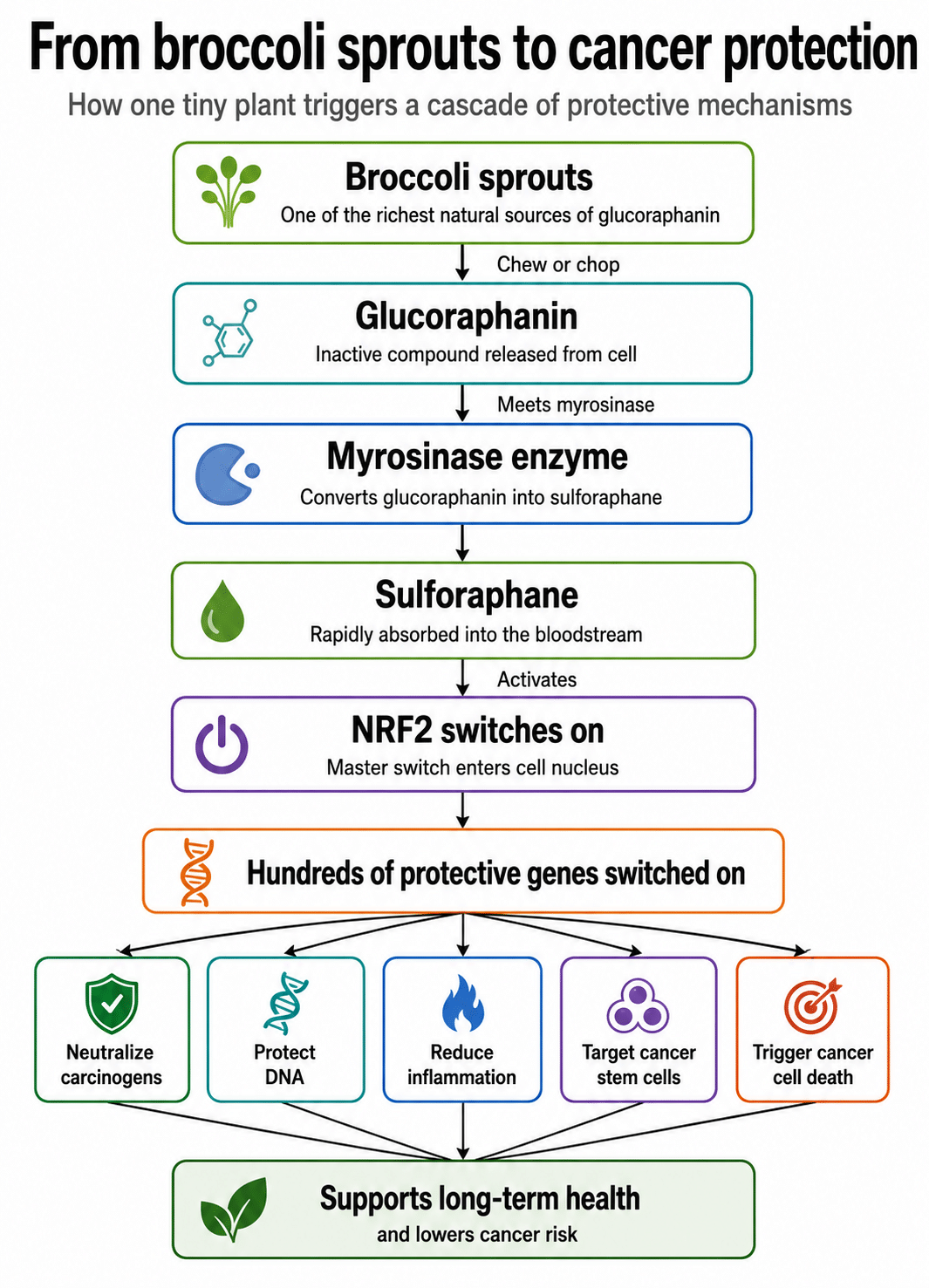
Sulforaphane forms when you chew or chop broccoli sprouts, or any raw cruciferous vegetable. Chewing breaks open the plant cell walls, allowing two compounds to mix together: glucoraphanin (stored inactive in the plant) and myrosinase (the enzyme that activates sulforaphane). Think of it like a glow stick; nothing happens until you snap it and the chemicals mix together and react.
A 2015 study confirmed that chewing fresh broccoli sprouts significantly increases sulforaphane absorption by allowing glucosinolates to mix with myrosinase.
Once active, sulforaphane is absorbed fast; studies show around 80% bioavailability, meaning most of what you eat actually gets into your bloodstream and to your cells. A University of Illinois study found measurable anticancer biomarkers in the blood within 30 minutes of eating, peaking at three hours.
Sulforaphane is also one of the most effective phase II liver detoxifiers known.
Dr. Jed Fahey at Johns Hopkins University, arguably the world’s leading expert on sulforaphane, has spent decades studying this compound. His research is what put broccoli sprouts on the map.
Indole-3-Carbinol: The estrogen regulator
The second major player is Indole-3-Carbinol (I3C). This compound forms when you digest cruciferous vegetables. It converts estrogen into a less cancer-promoting form (key for hormone-sensitive cancers), reactivates PTEN, a tumor suppressor gene that stops tumor growth, and blocks cancer cell proliferation by destroying a molecule essential for cell division. It has also shown activity against breast, prostate, melanoma, endometrial, liver, and pancreatic cancer cells (Memorial Sloan Kettering Cancer Center overview). While broccoli sprouts are famous for their exceptionally high sulforaphane content, they also provide glucobrassicin, the precursor to I3C.
Broccoli Sprouts vs. Mature Broccoli
Broccoli sprouts contain 10-100 times more glucoraphanin (the sulforaphane precursor) than mature broccoli, depending on variety and growing conditions, according to a landmark 1997 study, a paper that changed how the world looked at sprouts.
Why the dramatic difference? Because the young sprout is in survival mode. Between days 3 and 5 of germination, it mobilizes its entire chemical defense arsenal, and glucoraphanin concentrations hit their peak as the plant tries to protect itself from insects and predators.
These natural plant-produced antimicrobial “pesticides” are also anticancer compounds.
3- to 5-day-old sprouts are the ideal range for maximum potency.
Pro tips to chew on:
#1 Add mustard, horseradish, or wasabi to your sprouts; they contain their own myrosinase and can more than double sulforaphane absorption. Half a teaspoon makes a measurable difference.
#2 Freeze your sprouts to boost sulforaphane by up to 2 times. A 2015 study found freezing ruptures cell walls and triggers the glucoraphanin-myrosinase conversion all at once, the same as chewing, but throughout the entire sprout simultaneously. Best approach: eat some fresh on salads, and freeze some to use in juice or smoothies. They don’t need to be thawed.
5 Reasons to eat broccoli sprouts every day
1. Sulforaphane inhibits tumor growth and triggers cancer cell death (apoptosis)
Sulforaphane doesn’t just slow cancer; it triggers apoptosis while leaving healthy cells unharmed. This is the Holy Grail of cancer therapy, and it’s sitting in a mason jar on your kitchen counter.
Studies confirm this across cancer types:
-Breast cancer: A 2019 study found sulforaphane inhibited cell proliferation and tumor growth in triple-negative breast cancer, one of the hardest-to-treat forms of breast cancer
-Prostate cancer: A recent study showed sulforaphane triggered apoptosis in prostate cancer stem cells
-Lung cancer: A 2021 study found sulforaphane inhibited the self-renewal of lung cancer stem cells
-Brain cancer: Research found that sulforaphane induced apoptosis in glioblastoma cells
-Colon cancer: Since I’m a colon cancer survivor, this one hits close to home. Epidemiological studies consistently link cruciferous vegetables to lower colon cancer risk, and a 2025 meta-analysis found that just 40-60 grams daily lowered colorectal cancer risk by 20-26%. Another study found sulforaphane reduced precancerous colon lesions over 24 weeks. This is why I never stopped eating them.
Sulforaphane has also shown anticancer activity in bladder, oral, and blood cancers, and the list keeps growing…
Big Pharma is interested
The science has become so compelling that researchers developed SFX-01 (Sulforadex), a pharmaceutical-grade stabilized form of sulforaphane now in clinical trials for estrogen receptor-positive breast cancer that has become resistant to hormone therapy. When a natural compound becomes the inspiration for a new drug, you know the science is strong.
2. Sulforaphane targets cancer stem cells, killing the root of recurrence
Most cancer treatments kill the bulk of a tumor but leave cancer stem cells (CSCs) behind, the cells most resistant to chemo and radiation, and the ones responsible for cancer coming back years later. Sulforaphane specifically targets and eliminates them.
A prostate cancer study showed it eliminated cancer stem cells without harming normal tissue. Breast cancer researchers found the same in triple-negative breast cancer.
3. Sulforaphane blocks angiogenesis, cutting off the tumor’s blood supply
Tumors grow their own blood supply by releasing chemical signals, a process called angiogenesis. Blocking angiogenesis starves the tumor.
A study in Scientific Reports confirmed that sulforaphane blocked all three angiogenesis pathways simultaneously. The Angiogenesis Foundation notes that sulforaphane blocked all three key angiogenesis drivers and reduced breast cancer stem cells by 65-80% in lab and animal studies.
4. Sulforaphane activates your body’s master detox system
Your body has a built-in detox command center called NRF2. Think of NRF2 as the master switch for your body’s cleanup and repair crew. Most of the time, it sits quietly in the background. Sulforaphane flips it on.
NRF2 then moves into the cell nucleus and switches on hundreds of protective genes, producing antioxidants and detox enzymes that help neutralize carcinogens before they damage your DNA. This includes heterocyclic amines from the carcinogens in charred meat, benzene from air pollution, aflatoxins from moldy grains and nuts, acrolein from cigarette smoke, and more.
Most antioxidants like vitamin C work by neutralizing free radicals one molecule at a time. Once they get used up, they need to be replaced. Sulforaphane works differently. It activates your body to produce its own antioxidants, including glutathione, for hours after a single serving. Research shows NRF2 activation helps protect against carcinogenesis in skin, oral, stomach, colon, lung, and bladder cancer.
That’s one reason broccoli sprouts have been studied for such a wide range of health conditions. Rather than targeting one disease, sulforaphane strengthens your body’s own defense systems.
A 291-person clinical trial showed broccoli sprout beverages increased urinary excretion of benzene by 61% and acrolein by 23%, two harmful air pollutants linked to cancer. Fared Fahey’s review also identified more than 50 clinical studies on broccoli sprouts and sulforaphane. That’s impressive for a vegetable that you can grow in a jar.
5. Sulforaphane helps switch protective genes back on
Cancer doesn’t usually happen because one gene suddenly breaks. Over time, genes that protect you get switched off, while genes that help cancer grow get switched on. This gene flipping process is called epigenetics, and it’s one of the hottest areas of cancer research.
The exciting part is that some of these changes aren’t permanent. Sulforaphane influences epigenetics by inhibiting enzymes called histone deacetylases (HDACs) and affecting DNA methylation; in simple terms, it helps switch protective genes back on and quiet genes that encourage cancer growth. Researchers have found these effects in breast, prostate, colon, lung, pancreatic, and other cancers. A study found that eating one cup of broccoli sprouts reduced HDAC activity in blood cells within 3-6 hours. HDAC inhibitors are also used as cancer drugs; here you are getting the same effect from a vegetable.
Instead of changing your DNA, sulforaphane helps change which parts of your DNA get read. Think of your DNA as a huge instruction manual. Every cell has the entire book. Epigenetics decides which pages get opened and which stay closed. Sulforaphane helps open more of the pages that protect your cells.
Broccoli sprouts vs. Cruciferous vegetables
Let’s give the rest of the family their dues.
Brussels sprouts, kale, cabbage, cauliflower, arugula, watercress, and radishes all contain glucosinolates, I3C, and varying amounts of sulforaphane building blocks. Eating them regularly is associated with lower cancer risk across multiple large epidemiological studies. Don’t stop eating them. They’re your anticancer bench players, but broccoli sprouts are the MVP by a wide margin.
As the broccoli grows into a mature fibrous vegetable, the concentration ratio of these compounds drops dramatically.
Broccoli sprouts deliver 10-100 times more glucoraphanin by weight than mature broccoli, and because they are eaten raw, the myrosinase enzyme stays intact and produces sulforaphane. When you cook broccoli, you lose this key benefit.
Think of it this way: Eating cruciferous vegetables daily is a great anticancer strategy. Adding broccoli sprouts takes it to a whole new level.
Broccoli Sprouts protect against radiation damage
This is especially relevant for anyone going through or recovering from radiation therapy or undergoing CT or PET scans.
Radiation damages healthy cells caught in the crossfire, and DNA damage is also how cancer develops in the first place. Studies suggest sulforaphane may help protect healthy cells from oxidative damage while making some cancer cells more sensitive to radiation.
On healthy cells: A study found sulforaphane reduced DNA damage by up to 70% in human cells exposed to radiation and by 30-44% after certain chemotherapy drugs.
On tumor cells: Another study found sulforaphane increased the sensitivity of some cancer cells to radiation, resulting in greater tumor cell death than radiation alone.
That’s a remarkable combination; sulforaphane protects healthy tissue while increasing radiation sensitivity in certain cancer cells.
Beyond Cancer: Bonus Benefits!
Heart & Metabolic Health
-Improved Insulin Sensitivity: A randomized double-blind clinical trial found broccoli sprout supplementation significantly reduced fasting blood glucose and insulin levels in Type 2 diabetic patients
-Lower Blood Pressure: A 2022 meta-analysis of 10 clinical trials confirmed broccoli sprouts have blood pressure-lowering properties
-Lower LDL: A randomized clinical trial found broccoli sprout powder significantly reduced harmful LDL cholesterol, the kind that builds up in artery walls and drives heart disease
-Better Gut Health: Your gut does more than digest food. It helps regulate inflammation, immunity, and even how well you absorb nutrients from the foods you eat. In a randomized human trial, people who ate 20 grams of broccoli sprouts daily for four weeks had improved bowel habits and reduced constipation compared to those who ate alfalfa sprouts, with researchers attributing the effect to sulforaphane’s ability to reduce oxidative stress in the digestive tract. A 2024 study found eating broccoli sprouts daily for 8 weeks reduced gut inflammation and increased beneficial butyrate-producing bacteria in people with mild ulcerative colitis.
Brain & Mental Health
-Autism: Multiple trials and meta-analyses found sulforaphane improved social responsiveness, irritability, and hyperactivity in children and young adults with autism, with symptoms returning when treatment stopped. Emerging research also links sulforaphane to reduced glutamate levels, a compound associated with depression and schizophrenia.
-Alzheimer’s & Dementia: A 2025 study found broccoli sprout extract improved long-term memory in animal models of Alzheimer’s disease. A 2025 review confirmed sulforaphane slows one of the key biological processes that drives the disease. In mice with Alzheimer’s, broccoli sprout juice protected brain cell connections by over 65%. Sulforaphane has also shown neuroprotective effects in models of Parkinson’s, multiple sclerosis, and traumatic brain injury.
Other Benefits
-Skin & UV Protection: A Johns Hopkins study found broccoli sprout extract reduced UV-induced skin damage by up to 78%, and the protection lasted several days after the extract was no longer present. Unlike sunscreen, it works inside your cells. Sulforaphane also works when applied directly to the skin; a study found topical broccoli sprout extract reduced UV-induced skin inflammation.
-H.pylori & Antimicrobial Benefits: H.pylori is a bacterial infection linked to stomach cancer that affects about half the world’s population. A clinical trial found that eating broccoli sprouts daily for just 8 weeks significantly reduced H.pylori colonization, and earlier research showed sulforaphane penetrates inside cells to eliminate intracellular bacteria that antibiotics often can’t reach, something most pharmaceuticals can’t do. Beyond bacteria, a Johns Hopkins study found sulforaphane inhibited multiple strains of SARS-CoV-2, and a 2025 review confirmed broad antimicrobial activity across a wide range of pathogens. Nature’s antibiotic in a sprout. Here’s what makes this really interesting: sulforaphane doesn’t just kill bacteria on the surface.
How to grow your own broccoli sprouts
This is one of the simplest things you can do. No garden. No dirt. No special equipment.
What you need:
-32 oz Mason jar with a screen lid
-Organic broccoli sprout seeds
-Filtered water
The Sprouting Company sells the highest glucoraphin broccoli seeds on the market, and I really love their innovative large, wide-mouth sprouting jars and stands. The founder, Doug Evans, author of The Sprouting Book, is a dear friend, and I invested in his company a few years ago to help get it off the ground. :)
Get 10% off seeds and jars at The Sprouting Company with the coupon code CHRIS.
Sprouting Directions:
1. Add 2 tablespoons of seeds to a glass jar. Fill with water and soak for 8-10 hours.
2. The next day, rinse the seeds with fresh water and drain the excess water. Propping the jar upside-down at an angle helps drain off excess water and prevent mold growth.
3. Rinse the seeds twice per day and watch them grow! After 4 to 5 days, when the tail on the sprout is about an inch long, they’re ready to eat.
4. Rinse and let them dry, then store in the fridge for 5 to 7 days in a breathable container.
Daily recommended amount: Aim for 1/2 to 1 cup per day as a therapeutic target. Most studies show benefit at this range. More than 4 cups of broccoli sprouts per day may be too much and could cause cramping or an upset stomach.
How to eat them: Toss them raw on a salad, pile them on avocado toast, throw them in wraps, blend them into smoothies (freeze or chop first!), or try my Broccoli Sprout Pesto recipe from Beat Cancer Kitchen. Use them anywhere you’d add a garnish. Do not cook them, microwave them, or add them to anything piping hot. Raw is key.
What about supplements?
Most broccoli sprout powders and sulforaphane capsules contain glucoraphanin but little to no active myrosinase, which limits the conversion to sulforaphane. A clinical study found sulforaphane bioavailability from supplements was dramatically lower than fresh sprouts. The same goes for I3C supplements; high-dose versions have shown mixed results in animal studies. Avoid the gimmicky shortcut supplements. Fresh beats powder or capsules every time.
A note on Diindolylmethane (DIM): When you eat broccoli sprouts, your body naturally converts I3C into DIM during digestion. A systematic review of 22 clinical trials found DIM increased estrogen metabolism, reduced PSA levels, and upregulated BRCA1, showing promise for breast and prostate cancer prevention. Memorial Sloan Kettering notes DIM shows promising anticancer effects for breast and prostate cancer, but clinical data is still limited, and high-dose supplements have been linked to blood clots.
The bottom line
Broccoli sprouts are one of the most researched and validated anticancer foods ever studied. They are cheap, easy to grow, and backed by decades of science from the world’s leading cancer research institutions.
They are nature’s chemotherapy prevention at its finest. Let’s get growing!
Get 10% off at The Sprouting Company with the coupon code CHRIS.
Watch my interview with “Sprout Master” Doug Evans here.
…
I created a coaching program and a private online support community to help you survive and thrive through cancer. The SQUARE ONE Program contains the step-by-step strategies used by myself and many others who have healed cancer with a holistic approach using evidence-based nutrition and natural non-toxic therapies.

This Post Has 11 Comments
Thank you for all of your information and passion for helping us cancer patients.
I have read that I would have to eat a huge amount of sprouts for it to do any good. I appreciate your input.
It started with breast cancer in 2016 and it returned in 2023. I’ve been on IBranz for about a year now. I’m too scared to stop for fear of it returning again. My WBC is 2.4 and no one is alarmed but me. Thank you Chris. You are my inspiration.
Kathy
Thank you Chris
Love the Sprouting Company. I remember doing my sprouting in a Mason Jar. So awesome you are are healing with natural practices, and food. I’ve lived my whole life that way. Keep healing.
Thank you so much for all your advice. God bless you.
Amazing article, amazing sprouts!! Soooo easy to grow broccoli sprouts!! Btw, with the bacteria-on-fresh-produce scare, this is an easy way to grow your own healthy sprouts! Sprouts salad! Sprout snacks. Sprouts added to smoothies and so much more! Thank you, Chris!
Thank you so much for all the information. I truly appreciate it.
As for growing your own sprouts that is truly appreciated
Thank you so so much for the information..Just me reading your article it gives me life and i pray Fod will continue to give wisdom and knowledge that will heal and restore us ..Thank you again and again
Mr Chris Salom
GOD BLESS YOU, CHRIS! You are truly HIS instrument in helping people heal from that dreaded cancer. Thank you.
Chris, thank you for all the good information you share so freely.
So, I do have a question… it’s not clear to me in this article whether DIM in the broccoli sprouts can cause blood clots AS WELL AS the DIM supplement. Or is the supplement the only culprit?
Thank you!
Thanks for this article of great information, Chris. I’m getting my seeds from the Sprouting Co and will put in your code next time. That helps.
Great article!!! I buy broccoli sprouts at the local Santa Barbara farmers market. If they are out of broccoli sprouts, then I buy kale or radish sprouts. What about the broccoli sprouts that are grown in dirt and a few days older than the water grown ones. What do you think of those?
Comments are closed.