

I’m not a fan of “superfood” claims. It’s mostly a marketing term used to sell you expensive powders, supplements, and exotic foods. But if I had to nominate one food group for superfood status, legumes would be it.
Way back in January 2004, I started eating legumes on purpose as part of my daily anticancer diet by adding sprouted alfalfa, clover, chickpeas, mung beans and lentils to my giant cancer-fighting salad.
Side note: All beans are legumes, but not all legumes are beans. Alfalfa, clover, lentils, peas, peanuts, chickpeas, and even soybeans are all legumes, but not technically beans. Having said that, I will be using the terms “beans” and “legumes” interchangeably in this article.
Legumes are one of the most affordable, accessible, and nutrient-dense foods on the planet. They’re filling, inexpensive, and easy to store. And they’re packed with carbohydrates, fiber, protein, folate, potassium, magnesium, iron, B vitamins, antioxidants, and other plant compounds, with no cholesterol and very little saturated fat. Humans have survived and thrived on legumes for thousands of years, and research links them to a long list of benefits, including better heart health, blood sugar control, gut and brain health, and longevity.
So let’s talk legumes!
Legumes are one of the best nutritional bargains in the grocery store
Researchers who compared the nutritional value and cost of 98 vegetables found that beans, especially pinto beans and lentils, were among the lowest-cost sources of fiber and potassium in the entire produce aisle.
How beans heal the gut: fiber, resistant starch, and good bacteria
When you eat legumes, some of it is broken down, absorbed through your small intestine and carried to your cells for energy. The rest of the plant matter, largely fiber and resistant starch, travels down to your colon.
Once the fiber and starch arrive in your colon, trillions of gut bacteria feed on it and produce short-chain fatty acids (SCFAs). One of the most important SCFAs is butyrate. Colonocytes, the cells lining your colon, prefer butyrate as their primary fuel source over glucose, and research suggests butyrate helps maintain the integrity of your intestinal barrier to calm and prevent inflammation in the gut lining.
Research published in Nature reported a rapid gut response to dietary changes. When researchers put people on a plant-based versus animal-based diet, they detected measurable changes in gut microbial activity within 24 hours.
Legumes: A true longevity booster
One studiy on beans and longevity followed 785 people aged 70 and older living in Japan, Sweden, Greece, and Australia. Researchers looked at different food groups to see which were associated with long life, and guess which food came out on top?
Legumes!
In fact, legumes were the only food group that consistently predicted long lifespans across the different populations studied. For every additional 20 grams of legumes eaten per day, roughly 2 tablespoons of cooked beans, researchers found about a 7 to 8% lower risk of death.
“Yeah but that’s a small study…”
A 2023 systematic review and meta-analysis of 32 cohorts including more than 1.1 million people and 93,000 deaths found that people who ate the most legumes had a lower risk of dying from any cause compared with those who ate the least. Every additional 50 grams (1/2 to 2/3 of a cup) of legumes eaten per day was also associated with a 6% lower risk of death from any cause, and higher legume intake was associated with a 9% lower risk of dying from stroke.
A staple food of the world’s longest-lived people
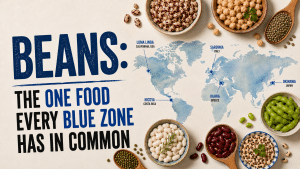
Dan Buettner has spent decades studying some of the world’s longest-lived populations, called Blue Zones, and one common dietary thread among them is beans.
You’ll find black beans in Costa Rica, lentils, chickpeas, and white beans throughout Mediterranean diets, and soybeans in Okinawa. These populations have been eating whole plant foods, including beans and legumes, for countless generations.
Turns out, beans are good for your heart
A prospective study followed 9,632 men and women for an average of 19 years. People who ate legumes at least four times per week had a 22% lower risk of coronary heart disease compared with people who ate them less than once per week. They also had an 11% lower risk of cardiovascular disease overall.
Another study in Costa Rica compared more than 2,100 people who had suffered a first heart attack with a similar group who had not. Eating about one-third cup of cooked beans per day was associated with a 38% lower risk of heart attack compared with rarely or never eating beans.
A Japanese study following nearly 60,000 adults for 13 years found that higher bean intake was associated with lower cardiovascular mortality and lower overall mortality.
When you combine studies like these with randomized trials showing improvements in cholesterol, blood sugar, and other cardiovascular risk factors, the picture comes into focus.
Beans lower LDL cholesterol
A meta-analysis of 26 randomized controlled trials involving 1,037 people found that eating a median of 130 grams of pulses per day, about one serving, significantly lowered LDL cholesterol. The average reduction was about 6.6 mg/dL compared with the control diets.
Another meta-analysis of 10 randomized controlled trials looked specifically at non-soy legumes such as beans, peas, chickpeas, and lentils. Legume-rich diets lowered total cholesterol by about 11.8 mg/dL and LDL cholesterol by about 8 mg/dL.
A separate randomized crossover study of adults over age 50 found that eating a pulse-rich diet for two months reduced total cholesterol by 8.3% and LDL cholesterol by 7.9%.
In another small study, researchers gave 26 people with peripheral artery disease about one serving of beans, lentils, chickpeas, and split peas every day for eight weeks. By the end of the study, arterial function had significantly improved, and four participants improved enough to move into the normal range on the ankle-brachial index, a test used to measure blood flow to the legs.
Beans help control blood sugar and insulin
Some people believe they should avoid beans because they are carbohydrates. Big mistake.
Beans are among the lowest-glycemic carbohydrate foods because the starch and fiber slow the absorption of glucose into your bloodstream.
One randomized controlled trial enrolled 121 people with type 2 diabetes and asked one group to eat at least 1 cup of legumes per day for 3 months. The comparison group increased whole-wheat fiber instead.
The legume group had a greater improvement in blood sugar control. Their A1C fell by 0.5 percentage points, compared with 0.3 points in the whole-wheat group. They also had a 4.5 mmHg greater reduction in systolic blood pressure and a greater reduction in calculated coronary heart disease risk.
That’s a big result from one small dietary tweak.
A 2023 systematic review and meta-analysis also found that randomized trials on legume consumption consistnetly improved fasting blood glucose and insulin resistance, along with total and LDL cholesterol.
This is one of the most important lessons about carbohydrates: don’t judge a whole food by one macronutrient. Look at the whole package.
Legumes and PMOS (PCOS)
Insulin resistance is common in women with polyendocrine metabolic ovarian syndrome (PMOS, formerly known as PCOS), so researchers conducted a 16-week randomized controlled trial of a pulse-rich diet in women with PMOS. The diet included lentils, beans, split peas, and chickpeas and was compared with the standard Therapeutic Lifestyle Changes diet.
Both groups also exercised and received health counseling. Compared with the standard diet, the pulse-rich diet produced greater improvements in several cardiometabolic measures, including insulin response, triglycerides, LDL cholesterol, HDL cholesterol, and diastolic blood pressure.
Beans aren’t a stand-alone treatment for PMOS, but this study gives women another good reason to include them as part of a healthy whole-food diet.
Beans and cancer prevention
A meta-analysis of 14 prospective cohort studies involving more than 1.9 million people found that higher legume consumption was associated with a 9% lower risk of colorectal cancer. Among Asian populations, the association was stronger, with an 18% lower risk, perhaps because they consume more soy.
But one of the most interesting bean studies involved people who had already developed colorectal adenomas, which are polyps with the potential to become cancerous.
Researchers analyzed participants in the Polyp Prevention Trial, and they found that those who increased their intake of beans including pinto, black, kidney, and navy beans had a 65% lower odds of advanced colorectal adenoma recurrence compared with those whose bean intake changed the least.
There’s also interesting research looking at compounds in legumes and cancer-cell behavior. Scientists have identified proteins in beans, chickpeas, and other legumes that interact with enzymes involved in cancer-cell invasion. In one study, proteins from several legumes reduced the activity of MMP-9, an enzyme that helps tumors break through surrounding tissue and invade nearby cells.
A bean is so much more than a source of protein, carbs, and fiber.
Beans feed beneficial bacteria
In a 12-week randomized trial, people who ate 1/2 cup of cooked pinto beans every day showed changes in gut microbial fermentation and short-chain fatty acid production. In a separate resistant-starch study, increasing fermentable resistant starch significantly increased fecal butyrate levels. The response varied from person to person.
This is one reason I constantly encourage people to eat more fiber-rich whole plant foods. When you eat beans, you’re getting nutrients for yourself and fermentable fiber that feeds your gut microbes. The Standard American Diet is woefully dificient in fiber. We all need to eat more beans.
Want a smaller waist? Eat beans.
Beans are exceptionally filling because they combine fiber, complex carbohydrates, and plant protein in a low-calorie package. That combination helps satisfy your appetite and fill you up without overeating.
A randomized trial in women with central obesity compared two calorie-restricted diets, one enriched with legumes and one without found that both groups reduced their waist circumference, but the legume-rich diet also improved several metabolic measures.
When you swap legumes for calorie-dense processed food and animal food, you get more fiber, more volume, and more nutrition per bite.
Beans and brain health
Harvard researchers followed 49,493 women and 27,842 men and examined their long-term dietary protein intake and later subjective cognitive decline.
Replacing just 5% of calories from animal protein with plant protein was linked to 16% lower odds of subjective cognitive decline. And replacing carbohydrate calories with plant protein showed an even stronger link, at 26% lower odds. Beans and legumes specifically were tied to lower odds of decline.
Another study of 214 adults over 64 found the same thing: a legume-rich diet was tied to better cognitive scores after a year of follow-up.
Do beans prevent dementia? We don’t know. But they fit into a dietary pattern associated with healthier aging.
Beans help keep you regular
Beans are one of the richest sources of dietary fiber, and that fiber helps keep things moving. In one human study, adding 100 grams of red kidney beans per day significantly increased stool output and favorably affected colon function. Researchers concluded that beans provide a physiologically useful source of dietary fiber.
Lentils work too. In a controlled feeding study, eating green lentils increased daily stool weight by nearly 45%. And a large systematic review of 113 randomized trials found that increasing dietary fiber helped increase stool weight and bowel-movement frequency, soften stools, and shorten intestinal transit time.
So instead of reaching for a fiber powder, start looking at your plate. The best source of fiber is food.
But don’t beans make you toot?
There is some truth in the childhood rhyme, especially if your gut isn’t accustomed to eating much fiber.
Beans contain fermentable carbohydrates that your intestinal bacteria break down. Gas is a normal byproduct of this fermentation, and experiencing increased gas is normal at first.
If you’ve been eating a low-fiber diet and suddenly eat two cups of beans every day, your digestive system might protest a bit. If you’re sensitive to beans, you can start small with 1 tablespoon per day, then gradually increase to 2 tablespoons, 1/4 cup, and eventually 1/2 cup or more.
Give your digestive system time to adjust. Chew your food thoroughly, drink plenty of water, and if you’re cooking dried beans, soak them first; discarding the soaking water can help. Rinsing canned beans is another simple option.
In the short term, to help alleviate gas or bloating, you can take an alpha-galactosidase digestive enzyme, such as Beano or Digest Gold, taken with your meal. You can get discount pricing on Digest Gold in my Fullscript Community.
What about lectins?
Beans contain lectins, and raw or undercooked kidney beans contain high levels of a lectin called phytohaemagglutinin, or PHA, which can cause nausea, vomiting, and diarrhea. That’s true. But somewhere along the way, this fact morphed into a myth that properly cooked beans are dangerous. They’re not.
Research shows soaking and boiling significantly reduce active lectins, and the FDA states that properly cooked and canned kidney beans contain low levels of PHA that aren’t a health concern.
And what about phytates?
Beans contain phytates, another compound incorrected labeled an “antinutrient” because they can reduce the absorption of minerals like iron and zinc during a meal. But phytates do not leach minerals from your body. You will not develop a mineral dificiency from eating too many beans or whole grains.
Research shows phytates also have antioxidant activity and may offer protection against various chronic diseases.
Phytates, aka phytic acid, aka inositol hexaphosphate or IP6 is also a known anticancer compound. You want it in your body!
Don’t let misinformed influencers scare you away from one of the most consistently health-promoting food groups on the planet.
Sprout or cook your beans and enjoy them!
Legumes are an excellent source of protein
One cup of cooked beans typically contains around 15 grams of protein, about the same as two eggs or a serving of Greek yogurt. Lentils contain 18 greams of protein per cup. Soybeans contain a whopping 33 grams of protein per cup!
And unlike animal protein, beans come packed with carbohydrates, resistant starch, higher levels of antioxidants, and contain little to no saturated fat, and zero cholesterol.
Some beans may not be a “complete protein” on their own, meaning they’re missing one or two essential amino acids. But pair them with a whole grain like rice, and you get a full amino acid profile, which is exactly why beans and rice have shown up on plates around the world for generations. Having said that, it is a long disproven myth that you need to eat all the essential amino acids to make a complete protein at the same meal to get the benefits.
That’s what I love about beans. You’re not just getting protein. You’re getting a whole package of nutrients and protective plant compounds that no chicken breast or protein shake can match.
How many beans should you eat?
Dr. Michael Greger has done extensive research on the health benefits of beans and legumes and recommends eating them every day as part of his Daily Dozen, which encourages three servings of legumes per day. Half a cup of cooked beans, lentils, split peas, etc. count as one serving.
Take the 30-day Legume Challenge
Eat at least 1/2 cup of beans or lentils every day for 30 days.
And mix it up! Add black beans to a burrito bowl, lentils to a soup, chickpeas to your Giant Cancer-Fighting Salad, or a side of black-eyed peas with your typical dinner.
Pay attention to how you feel, especially your hunger, digestion, bowel movements, and energy. If you’re working on your weight, measure your waist before and after the 30 days.
And if you’re working on cholesterol or blood sugar, make beans and other whole plant foods a regular part of your diet for a few months and then recheck your labs.
The takeaway here is simple. Eat beans daily.
Red beans and red rice
One of my favorite simple meal recipes is the Red Beans and Red Rice recipe from my Beat Cancer Kitchen cookbook. It’s a simple, satisfying meal loaded with fiber and essential nutrients. And with food prices as high as they are, meals like this make even more sense.
The humble bean deserves more respect
Beans aren’t trendy, and they never will be. But the research makes them a rock star. Higher legume consumption is linked to lower all-cause mortality, lower stroke and heart disease risk, and lower LDL cholesterol. Other trials show improvements in blood sugar, insulin resistance, and metabolic health. Beans feed your gut bacteria, keep you full, and are tied to better cognitive health and lower risk of colorectal cancer.
That’s a pretty impressive résumé for one of the cheapest foods in the grocery store. You don’t need an exotic “superfood” shipped halfway around the world. Sometimes the healthiest foods are hiding in plain sight.
Eat beans. Your heart, gut, brain, and wallet will thank you.
Finally, as for the flatulence, consider this…
“If you don’t find farts funny, you are choosing to have less joy in your life, with the exact same amount of farts.” -Unknown
Want to go further? Soy is arguabley the most potent anticancer legume. Learn more in my article The Truth About Soy.
…
I created a coaching program and a private online support community to help you survive and thrive through cancer. The SQUARE ONE Program contains the step-by-step strategies used by myself and many others who have healed cancer with a holistic approach using evidence-based nutrition and natural non-toxic therapies.

This Post Has 20 Comments
I’ve heard to access the most benefits from beans you’re supposed to eat them alone, especially avoiding protein and fats. Did you come across this in your research?
Hi Chris
You are awesome and we are glad to have you!
I know how valuable beans are, but sadly my wife experiences a very bad bloating and sometimes heartburn after consuming legumes. We tried to stick to a whole food plant based diet for about a year and this has not changed unfortunately. She had to revert back to meats / poultry (although clean, organic and pasture raised) but wished we could find a way to improve her issues and allow for eating beans on regular basis as this is the core of the vegan diet and protein source.
Take a look t Dr. Ed Group’s probiotics for redesigning your microbiome. Excellent!
Are you talking about beans in a can or plastic bag
Fresh beans in a bag sounds about right.
Thank you for your article. I love beans and will definitely start eating more. I had colon cancer 3 yrs ago and the fear is always there. I just started the Beta Glucan after watching the pod cast.
Thank you again for all your wonderful information!
God Bless you and your family.
Good information..
Try cooking dry beans for yourself, intead of from a can, and see if that helps. Also soak those dried beans overnight and pour off the soaking water, adding fresh water for cooking. And cook thoroughly, even overcook; see if these methods don’t help her be able to digest them! I believe you’ll be pleasantly suprised! Try it for a month or two or three to see if she is no longer bothered by beans. My guess is she’ll be pleasantly surprised. (PS–I think canned beans are undercooked, while home-cooked beans using the soaking methods first–are much more palatable.)
Really useful as article, thanks a lot
Legumes are the food of the future!
What about peanuts in particular … I guess I thought I had heard these were not good for us, maybe just those of us who have, had or are dealing with cancer?
For those struggling with bloat from beans, try cooking them with a piece of KOMBU seaweed along with soaking and thoroughly rinsing them first. You can discard the seaweed after the beans are finished cooking, and nobody would know it was there or taste a difference… but you will notice the difference in bloating reduction.
This was a game changer for me. Ultimately… I needed to take time to let my leaky gut heal, but properly soaking rinsing and preparing beans with kombu really helped.
“needed time to let my leaky gut heal”? Can you tell me what caused it and have you successfully resolved it and if so, how? Thank you David.
Donna
Thanks Chris. God bless you and your family.
A great refresher and reminder for me! Thank you!
Indian recipes often use asoefetida ?sp to mitigate gas. I pressure cook a few bay leaves and slices of fresh ginger in a few cups of water, let the water cool, soak the beans overnight and pressure cook them 7 minutes in the same water.
I’ve had less and less gas over the years.
I carry Bean-O when I’m out as most others don’t use any gas avoiding preparation.
Thats why Mr. Rowan Atkinson calls himself Mr. Bean!
I had a friend tell me to add 1Tablespoon of mustard to my cooking beans! I think it helps! Another said add corn to get a full protein!
Where can you purchase soy beans? From my understanding soy is a genetically modified product.
Organic soy is not genetically modified. :)
I learned that putting baking soda in with the beans when you soak them helps with gas. I have been using 4 cans of dark red kidney beans with 3 cans of black beans to make chili. I rinse them well in a collander. Transfer to a large pot, cover the beans with water & add about 1/4 cup of baking soda. Wait at least 30 minutes. Then rinse 2 more times with fresh water. I have also added back in a level tsp of baking soda. It will disconnect the skins from the beans the longer you soak in baking soda water & it will bubble/foam your chili when added or left in. It doesn’t make it terrible, but you don’t want to leave much in when cooking. It does help some with gas. I haven’t experimented with different soaking times, etc.
Comments are closed.